Not sure you need a foundation repair company? Asking first is free.
If brick stepped, a door missed the latch, or a floor started to slope, talk through what moved with one or more foundation repair companies that serve your area. Asking is free.
Stair-stepBrick or block that steps with the joints
Door that sticksA latch that misses after a dry week
Floor slopeA marble that rolls toward one wall
Hairline at a cornerOften paint, still worth a look
Checked against public pages
The soil notes and local rules we quote link to the USGS, city, or state page they came from.
A short form
Your name, phone, email, state, and city. We never ask for a policy number or a photo of the crack.
You decide what's next
Asking for a call does not hire anyone. After you talk, whether to hire any of them is up to you.
Start here if any of this is happening
A crack after a dry month is often a soil problem first. These are the moments a call with a foundation contractor is meant for.
A stair-step crack showed up in brick or block
The Mississippi Geological Survey says Yazoo clay swells when it takes on water and shrinks when it dries, and that movement cracks houses in the Jackson belt. Other expansive clays do the same job in other cities.
A door that used to close now misses the latch
A frame that shifts with the floor is a common first sign. It does not name the cause by itself. A contractor should tell you what they think moved before they talk about piers.
The floor slopes, or a wall looks like it is bowing
A bowing wall is a reason to get a written look before anyone braces it. A contractor should say what they think is pushing on it.
You would rather talk to a person than guess
On a call, you can ask what they would measure, whether an engineer should see it first, and what your city will want on a permit.
What you can watch, what an engineer does, and what a crew does
Those three jobs get mixed up on a cracked morning. They are separate, and only one of them writes a bid.
What you can watch
What it is
A hairline crack that does not grow, and that does not open a door or a floor, is often a finish problem. Mark the ends with a pencil and the date.
What it costs to start
A pencil and a dated photo cost nothing. The agency pages we cite do not charge you to follow them.
Worth knowing
Watching is not a diagnosis. If the crack widens, steps, or a door starts to stick, get a closer look.
An engineer writes what moved and what the soil is doing. In Waco, the city says a foundation on expansive soil, or soil with a plasticity index of 15 or more, must be investigated and designed by a registered engineer.
What it costs to start
This page does not print an engineer fee, because we do not have a sourced national schedule for that visit.
Worth knowing
An engineer opinion is not a bid, and it is not a coverage decision.
A crew may inject a crack, install piers, or brace a wall. Licensing is local. Texas has no statewide foundation-repair license. Mississippi licenses residential remodelers above a dollar threshold.
What it costs to start
This page does not print a repair price we cannot source. Ask the company for a written scope and price.
Worth knowing
Ask for the scope in writing. The price, if you hire, is between you and that company.
Your name, phone, email, state, and city. It goes to one or more foundation repair companies that serve your area, not to your city or your insurer.
2
A company may call you
Expect a few questions: which wall, when you first saw the crack, and whether a door or a floor moved with it.
3
You choose
If a company's plan sounds right, you can hire it. You can tell any of them no.
Where the house actually sits
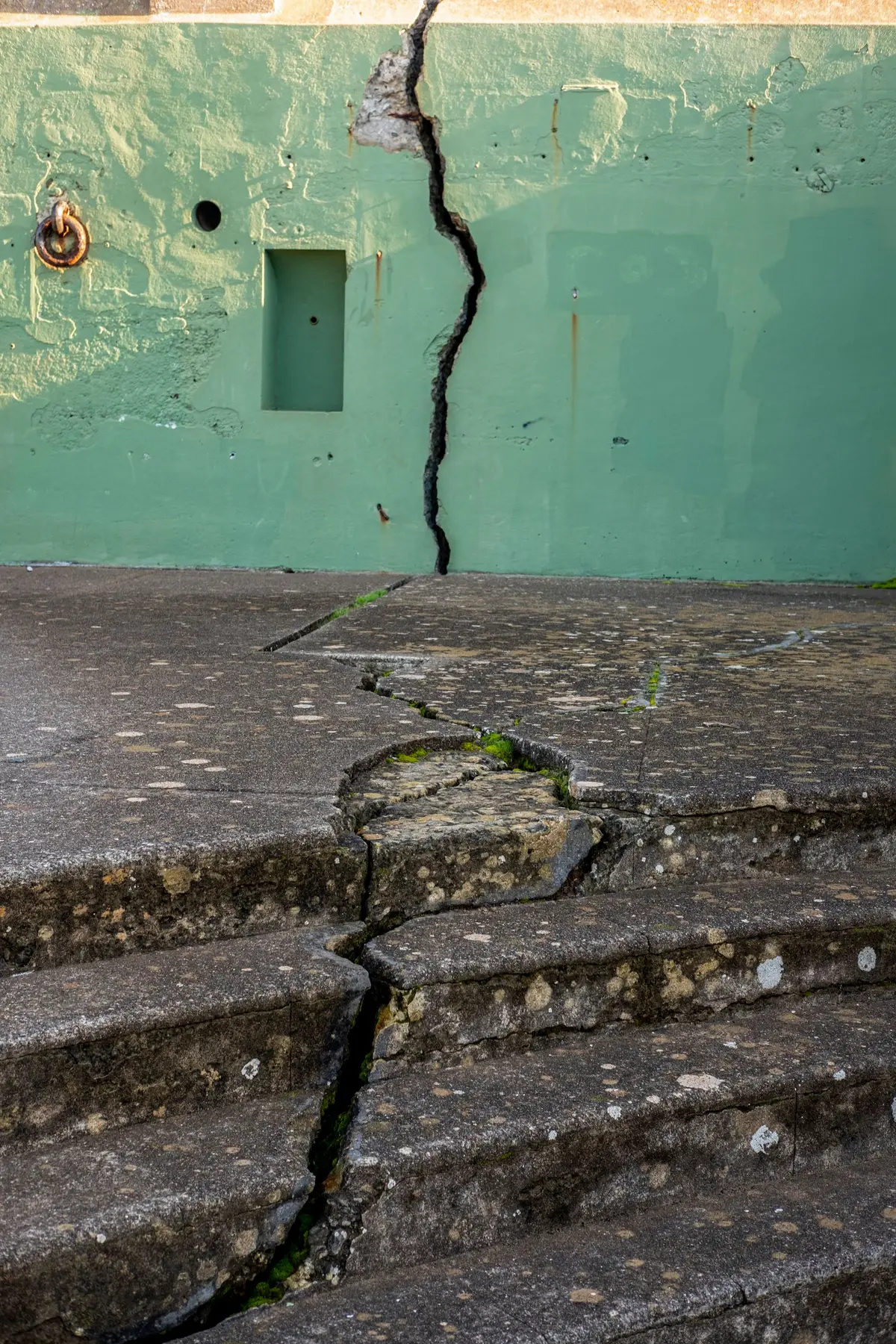
What you see on the paint is only the face of the wall. The load goes down a stem to a footing in the soil. When that soil shrinks or swells, the crack is the part you can see.
Wall crack
The line you can see. A stair-step in brick often follows the joints. A hairline in drywall can be paint, or it can be the first sign the frame moved.
Slab
The floor you walk on in a slab house. Slab work can be a crack repair or a lift, so the scope matters more than a headline price.
Stem wall
The short wall that carries the house down to the footing. A crack here is closer to the structure than a crack in interior paint.
Footing
The wide concrete pad under the stem. Repair crews talk about piers when they want to carry that load to deeper soil.
Soil
USGS Map I-1940 shows swelling clays across large parts of the South and the Plains. Clay that dries in a drought and wets in a storm is what moves many houses.
Have these nearby when the contractor calls
You do not need any of this to ask for a call. Having it close makes the first conversation more useful.
Which wall or door you first noticed, and about when it changed
Whether the crack is stair-step, vertical, or a hairline at a corner
Whether a door, a window, or the floor moved with it
Your city and whether you already called the building office
No. We are an independent guide. Any company that calls you is a private foundation contractor, and it is not a building department.
Does it cost anything to ask for a call?
No. Sending the form does not hire anyone. If you decide to hire a company, its fees are between you and that company, so ask about them on the call.
Can a company promise the house will stop moving by a certain day?
No one on this site can promise that. Movement depends on the soil, the water around the footing, and the work they actually do.
What happens after I send the form?
Footing Fix and one or more foundation repair companies that serve your area may call and text you at the number you entered, as the consent box explains. You can tell them to stop at any time.
Do you need my insurance policy number?
No. The form never asks for it, and you should not type it into any field on this site.
Read before you call
A full first-step guide, short answers, and a checklist for choosing a contractor. Each one is sourced to a public page and dated.